

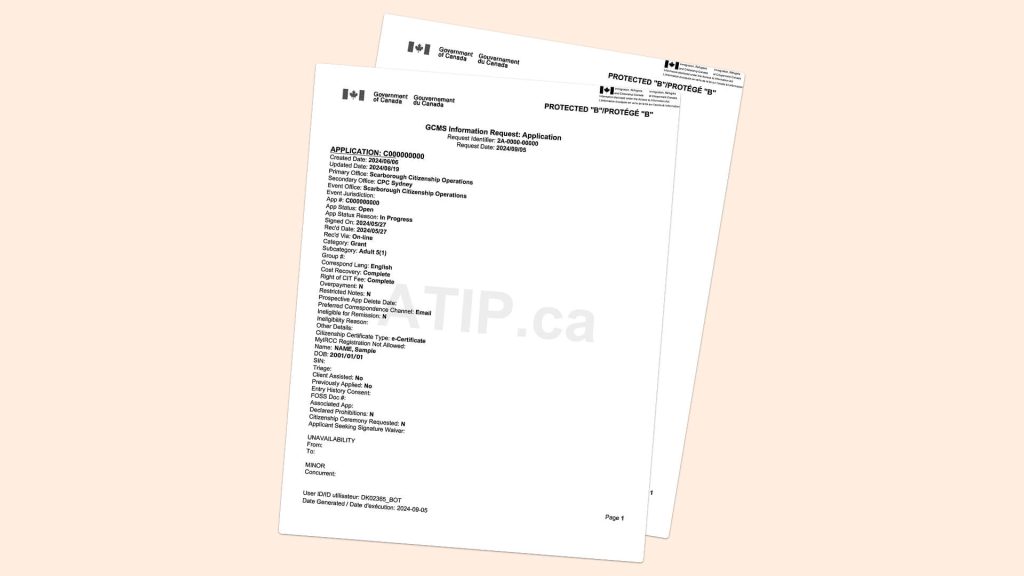
If you haven’t heard back from IRCC on your citizenship application in what feels like forever, take a deep breath. You’ve come to the right place. This guide on GCMS and ATIP notes for Citizenship applications will help you turn your worry into wisdom. Let’s uncover your file’s story together, step by step.
What are ATIP/GCMS Notes?
ATIP / GCMS notes allow applicants to access the internal records maintained by Immigration, Refugees and Citizenship Canada (IRCC) for their citizenship application. These notes are extracted from IRCC’s Global Case Management System (GCMS), the system used by officers to record application details, assessments, decisions, and internal comments throughout the processing of a citizenship file. By submitting an ATIP (Access to Information and Privacy) request, applicants can see the same behind-the-scenes information IRCC officers rely on, offering a much clearer picture of their application’s true status than what is shown in the online tracker.
Different between ATIP and GCMS
ATIP is the Canadian law and process for requesting government records, while GCMS notes are the detailed internal records from IRCC officers showing application progress and decisions.
ATIP (Access to Information and Privacy) lets eligible people request files from IRCC, like a key to unlock info. GCMS (Global Case Management System) notes are the actual content you get: officer comments, status updates, and reasons for delays or refusals.
GCMS replaced CAIPS when IRCC adopted the Global Case Management System in 2010.
What information do ATIP notes contain?
For citizenship applications, GCMS notes may include:
| ATIP Notes Section | What It Includes |
| Application Status | Current stage of the application (e.g., received, in progress, decision made) |
| Officer Comments & Assessments | Notes written by officers at Immigration, Refugees and Citizenship Canada regarding eligibility, concerns, or observations |
| Physical Presence Calculation | Detailed breakdown of days counted toward the physical presence requirement |
| Language & Knowledge Tests | Results and assessments of language ability and citizenship knowledge test |
| Background & Security Checks | Status and outcomes of criminality, security, and background verifications |
| Additional Document Requests | Records of any documents requested from the applicant and responses received |
| Reasons for Delays or Concerns | Internal explanations for processing delays or issues requiring further review |
| File Transfer History | Movement of the application file between different IRCC offices, with dates |
These notes are written by IRCC officers and are far more detailed than what you see in your online citizenship tracker.
How ATIP notes help with citizenship applications
ATIP notes play a critical role in helping citizenship applicants understand, manage, and respond to their application process more effectively. Unlike the basic status updates shown in the online tracker, ATIP notes provide a detailed, officer-level view of your file, making them especially valuable when timelines stretch or progress seems unclear. Here’s how ATIP notes help at each stage of a citizenship application:
Reveal the real status of your application
GCMS or ATIP notes show the actual internal status of your citizenship file as recorded by IRCC officers. This includes whether eligibility, physical presence, language, prohibitions, and background checks are not started, in progress, passed, or failed, information that is often missing or delayed in the public tracker.
Explain delays and processing holds
If your application appears stalled, ATIP notes often explain why. Officers may note:
- Background or security checks
Some applications are placed on hold while background or security checks are completed. These checks can take time and often happen without any visible updates in your online account.
- Third-party verifications
In some cases, officers are waiting for information from other departments or external partners. Until those verifications come back, the file may not move forward.
- Office transfers or workload delays
Applications are sometimes transferred between different offices due to workload distribution. When this happens, files can sit in queue longer than expected, even if nothing is wrong.
- Missing or unclear documents
If a document is incomplete, unclear, or difficult to verify, an officer may pause processing while deciding whether additional information is needed.
- Any other flags
Your application could be stalled for other reasons as well. For example, when you calculated your total physical presence, you missed a trip. There also can be any other issue with your application.
This insight helps applicants decide whether to wait, submit additional documents, or follow up with IRCC.
Provide officer comments and concerns
One of the most valuable parts of ATIP notes is the officer’s written commentary. These notes may highlight:
- Time spent in Canada
Officers may flag questions about how your physical presence was calculated, especially if dates don’t line up perfectly with travel records.
- Travel history
If you’ve travelled frequently, the officer may note questions about trips taken, missing entry or exit dates, or differences between your application and border records.
- Language and citizenship test results
Even if you passed, officers sometimes record observations about how confidently you communicated or how you performed during the knowledge test.
- Inconsistency across your application
Small inconsistencies like mismatched dates between your PR and citizenship applications or details across forms are often noted and can lead to follow-up questions or delays.
Knowing these concerns early allows applicants to prepare explanations or supporting evidence.
Help you respond to IRCC requests more accurately
When IRCC requests additional documents or clarification, applying for ATIP/GCMS notes and IRCC records helps you understand exactly what triggered the request. This reduces guesswork and ensures your response directly addresses the officer’s concerns, lowering the risk of further delays.
Assist in legal or professional review
Immigration lawyers and consultants often rely on ATIP notes to assess the strength of a citizenship application. The notes help professionals:
- Identify potential refusal risks
- Prepare legal submissions
- Decide whether judicial review or follow-up action is appropriate
This makes GCMS notes a crucial tool if your application becomes complex.
Support strategic follow-ups and escalations
With detailed insight from ATIP/GCMS notes tracking, applicants can time their follow-ups more effectively. Instead of generic inquiries, you can reference specific stages or notes in your communication with IRCC or your Member of Parliament.
Reduce stress and uncertainty
Citizenship processing can take many months. With ATIP/GCMS notes you can get transparency and peace of mind, and understand exactly where your file stands and what, if anything, is required from you.
Ghost updates
Sometimes, you might notice some unexplainable online profile updates from IRCC, signaling backend activity like document review or background checks. These are commonly called ghost notes.
ATIP notes help decode ghost updates by revealing the internal details not visible in an applicant’s online account, including officer comments, eligibility assessments, background check progress, and processing milestones recorded by Immigration, Refugees and Citizenship Canada.
These notes uncover whether a ghost update reflects meaningful progress such as an eligibility pass or background stage movement, or merely an administrative action, reducing uncertainty for applicants.
Click here to know more about ghost updates.
Sample Citizenship ATIP/GCMS notes
Below is a simplified example of what ATIP notes typically look like, followed by an explanation of each part so you know exactly what to expect.
Application Status: In Progress
Physical Presence: Passed
KnowledgeEligibility: Passed
LangaugeMedical: Passed
Criminality: Passed
Prohibition: Passed
Security: In Progress
Criminality: In Progress
Primary Office: CPC-Ottawa
Officer Note: “Knowledge assessment completed. Physical presence requirement complete. Langauge score verified. File pending security screening. No action required from the applicant at this time.”
This sample shows a common situation where most checks are complete, but the application appears stalled because security screening is still in progress. The officer’s note confirms that the applicant meets Physical presence and that the delay is procedural, not due to missing documents or concerns. Seeing a sample like this helps applicants understand that long periods without updates are often normal and not a sign of refusal.
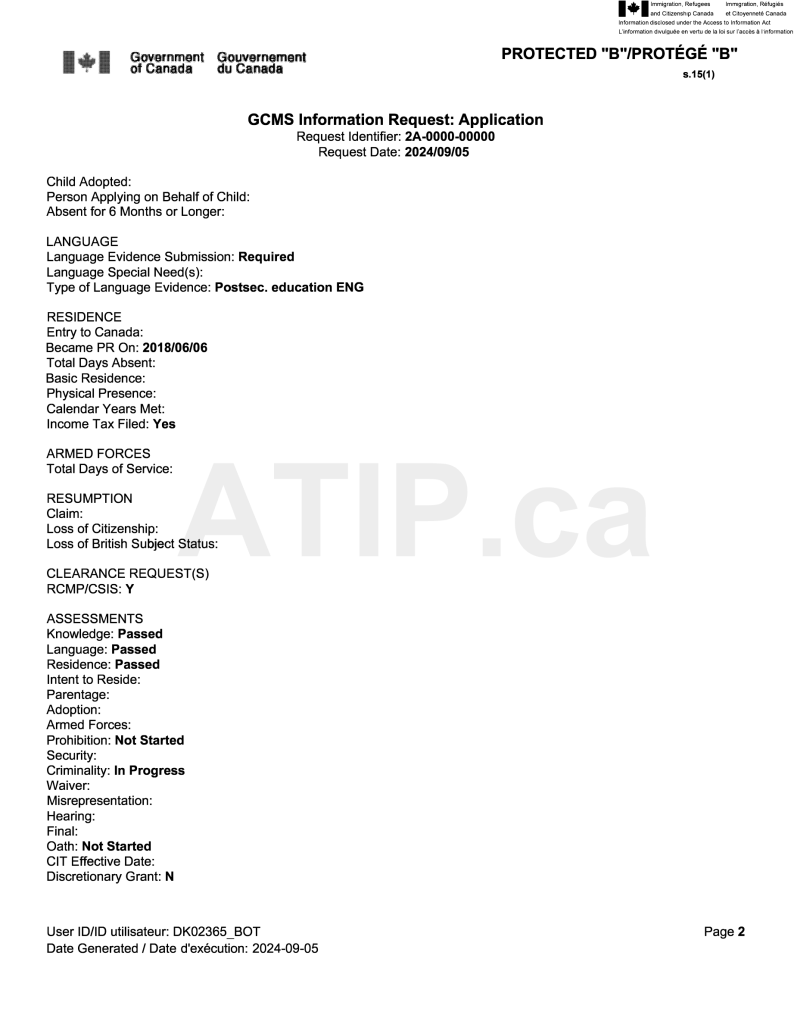
Visit here to see more Sample Citizenship Notes
When is the right time to apply for GCMS/ATIP notes?
The right time to request your ATIP notes is usually after you have received your AoR This ensures that immigration officers have begun reviewing your file and that meaningful assessments, comments, and internal updates are available.Requesting notes requires certain application information, including your application number, which becomes available only after AoR.
If your online tracker shows little progress, your application has been in process for several months, or you’ve received a request from IRCC, ATIP notes can provide valuable insight into delays, pending checks, or officer concerns. At this stage, the notes offer a clearer picture of your application’s true status and help you decide whether any follow-up or action is needed.
Who can request ATIP notes for a Citizenship Application?
Anyone can request ATIP notes for a citizenship application by submitting a request through atip.ca. This includes the applicant themselves or another individual acting on their behalf, provided the proper consent is included with the request.
ATIP.ca is trusted by tens of thousands of applicants every month to get access to their case notes. We also help hundreds of immigration consultants get access to their clients files.
What will my citizenship ATIP/GCMS notes contain?
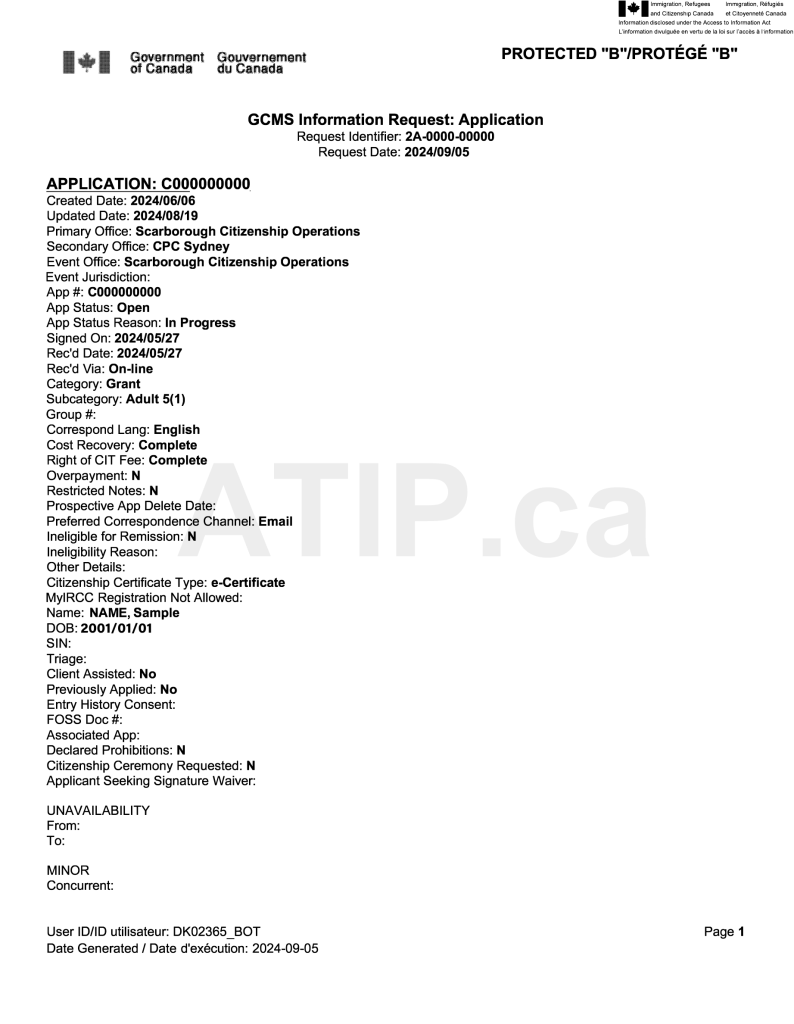
Curious to know what’s in your citizenship GCMS or ATIP notes? They reveal IRCC’s behind-the-scenes on your file, from checks to officer thoughts. Given below is a quick rundown of the contents and how to read them.
Expect these citizenship-specific gems in your notes:
- App details: Name, UCI, dates, office (e.g., RC-9515).
- Eligibility checks: Residency (1,095 days), language (CLB 4+), test status.
- Backgrounds: Security (CSIS), criminality (RCMP), statuses like “in progress”.
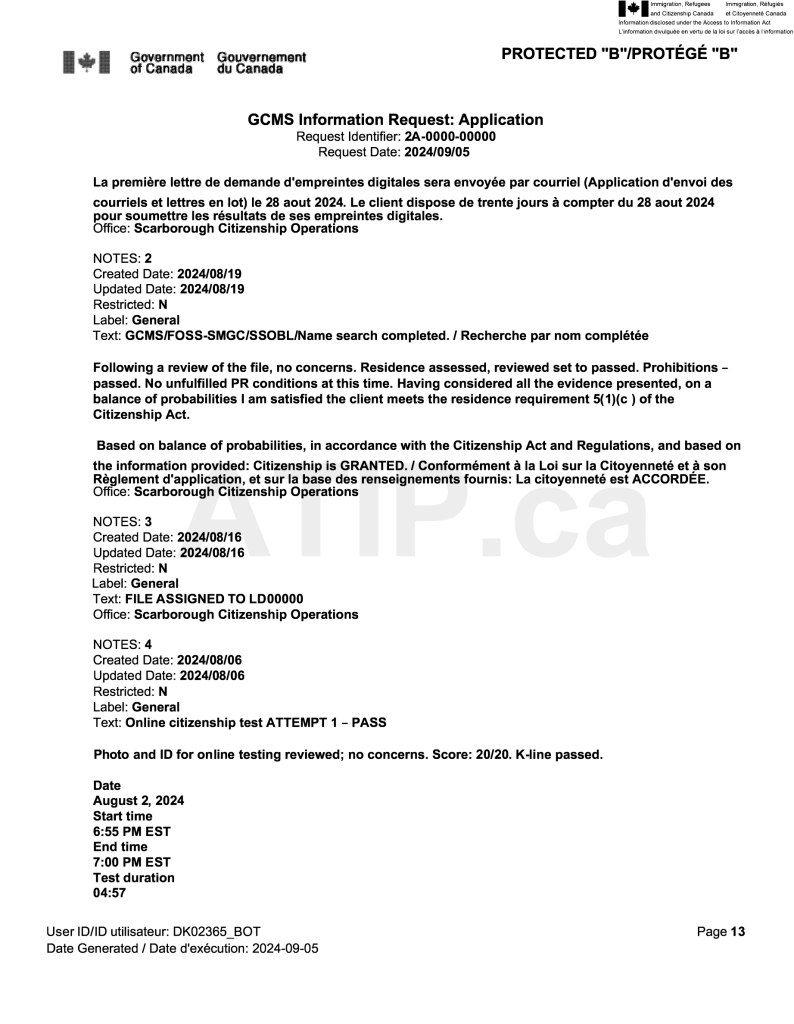
- Officer comments: Dated notes on issues or next steps.
- Verifications & actions: Extra doc flags, transfers, webforms.
- Some get redacted for security (s15/s16) or privacy (s19) – normal, protects sensitive bits.
Below are screenshots from a sample ATIP notes file:
How to read and interpret your notes
Follow this simple flow once you have received your notes.
- Summary page first: Scan Eligibility, Criminality, Security fields.
- Status fields: Match biometrics/timeline to “passed” or holds.
- Officer notes: Newest on top, spot concerns.
- Timeline match: Align with your events.
How to request ATIP notes for your Citizenship application
Requesting ATIP / GCMS notes for your citizenship file involves several stages, from placing your order and submitting consent to review, processing, and final delivery of your notes through the GCMS Dashboard.
You can manage this entire process easily and securely, from start to finish by visiting ATIP.ca, clicking on order and filling out a short online form with your basic details. No complicated steps, and no guesswork.
Once your information is submitted, the request is prepared and filed correctly on your behalf, saving you time and reducing the chance of errors or delays. For a detailed, step-by-step explanation of each stage, you can read our complete guide here.
How long does it take to receive my notes?
Under both the Access to Information Act and the Privacy Act, IRCC is legally required to respond to a complete ATIP request within 30 calendar days, and many straightforward ATIP requests are released within this standard timeframe. However, IRCC may extend the deadline in certain situations, such as when a request involves a large volume of records, requires consultation with other government departments, or during periods of high workload, meaning some applicants may receive their notes after the initial 30 days.
Limitations and when ATIP notes might not help
While ATIP notes are a valuable transparency tool, they may not always be complete or definitive. Understanding their limitations helps set realistic expectations and explains why certain details may be missing. The following points outline common situations where ATIP notes may provide limited insight.
Information that may be withheld or redacted
Not all information contained in IRCC’s internal systems can be released through an ATIP request. Certain details are legally protected and must be removed before the notes are shared. Common exemptions include:
- National security related information
- Ongoing law enforcement or background investigations
- Third-party or commercial information
- Personal information about individuals other than the applicant
As a result, your notes may include sections that are partially or heavily blacked out. This does not automatically indicate a problem with your application. In many cases, redactions are routine and required by law, even when your file is progressing normally.
This should not be the reason you should not apply for ATIP notes. Even if you see a redaction it means your application is in progress and you will really find out what’s happening once you get these notes.
Order your Citizenship ATIP notes
FAQs
1. What are GCMS / ATIP notes for Canadian citizenship applications?
GCMS (Global Case Management System) notes are internal records used by IRCC to process citizenship applications. When requested through an ATIP request, these notes reveal officer assessments, application status, background checks, and reasons for delays that are not visible in the online tracker.
2. Are GCMS notes useful for citizenship applications?
Yes. GCMS notes provide detailed, officer-level insights into your citizenship file, including eligibility checks, physical presence calculations, test results, and internal concerns. They are especially helpful when your application is delayed or lacks clear updates.
3. When is the best time to request GCMS notes for citizenship?
The best time is after you have received your Acknowledgement of Receipt (AoR).
4. How long does IRCC take to respond to an ATIP request?
By law, IRCC must respond within 30 calendar days of receiving a complete ATIP request. However, extensions may apply for complex files, large record volumes, or consultations with other government departments.
5. Who can request GCMS notes for a citizenship application?
Anyone can request GCMS notes for a citizenship application through ATIP.ca.
6. Why are some parts of GCMS notes redacted or blacked out?
Redactions are legally required to protect national security, internal government processes, and third-party privacy. These redactions are normal and do not automatically indicate a problem with your citizenship application.
7. Can ATIP notes explain delays in my citizenship application?
Yes. ATIP or GCMS notes often explain delays caused by pending background checks, office transfers, missing documents, or officer concerns. This information helps applicants decide whether to wait, submit documents, or follow up with IRCC.
8. How can ATIP.ca help with requesting GCMS notes?
ATIP.ca simplifies the entire ATIP request process by handling consent forms, submission, tracking, and delivery through a secure dashboard. This allows applicants to request GCMS notes easily without dealing directly with government portals.
9. What is the difference between GCMS notes and ATIP notes?
GCMS notes and ATIP notes are closely related but not exactly the same. ATIP refers to the legal request process under the Access to Information Act or Privacy Act, while GCMS notes are the records you receive as a result of that request.